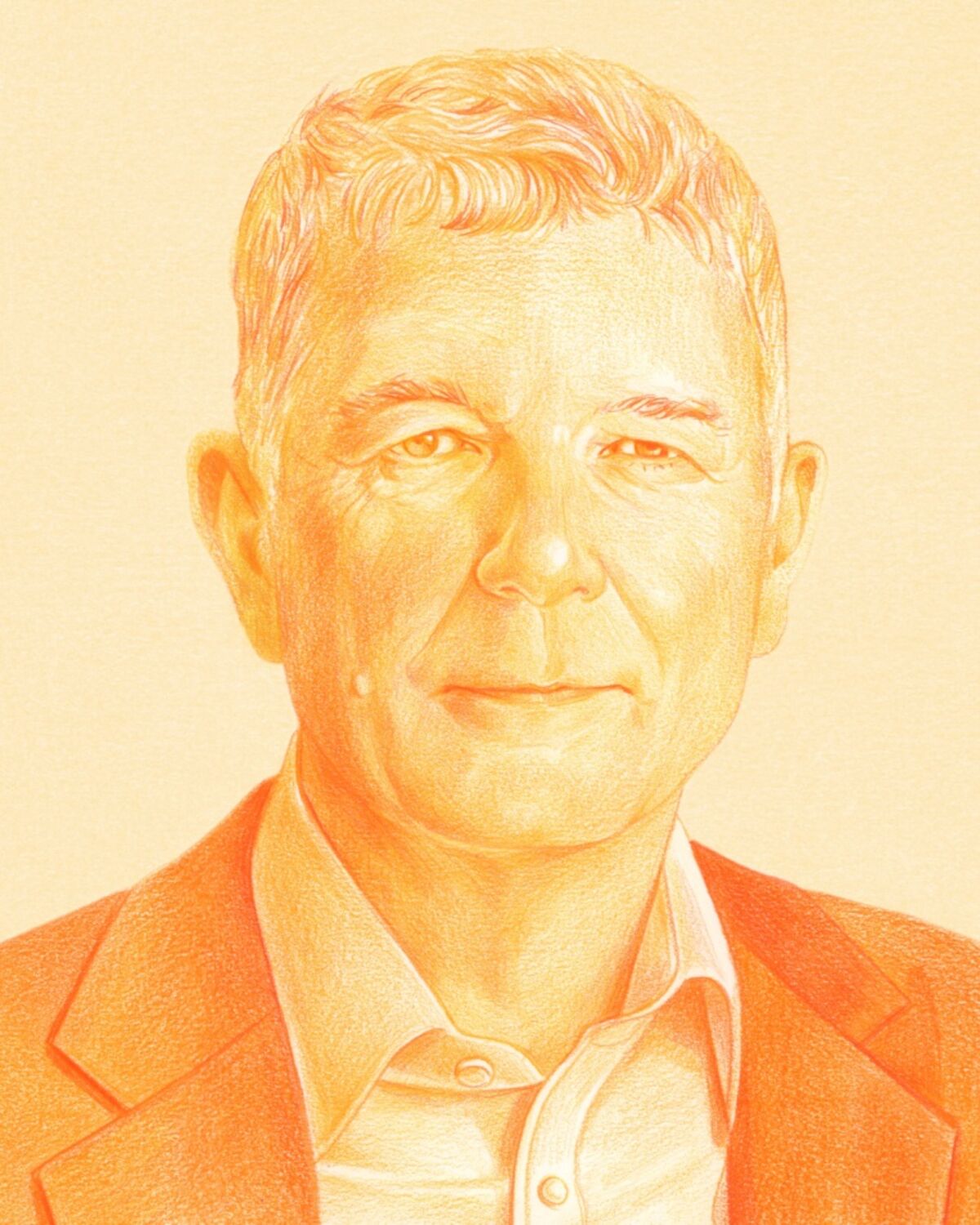
Ex-MI6 Chief Richard Moore: Spying Is an ‘Arms Race’
The longtime intelligence officer talks about managing China, the psychology of Putin, and why spies shouldn’t expect recognition.
For nearly 40 years, Richard Moore was a career spy in Britain’s Secret Intelligence Service — better known as MI6 — unable to tell anyone but his closest friends and family what he did for a living. When he was appointed chief of the agency in 2020, that changed: The name of the person in the top role is the only one made public.
Moore stepped down at the end of September, and this conversation is one of his first interviews since: a look back at the world in which he began his intelligence career and the one we live in today.
In office, Moore was known — as all MI6 chiefs are — as ‘C’, the role Ian Fleming turned into James Bond’s boss ‘M.’ And perhaps those long-honed skills in being unobtrusive are still intact: When he arrived at Bloomberg’s London office for our interview, he slipped past the small welcoming party and collected his badge without us even spotting him. It might have been the flat cap and overcoat — or maybe it’s just how he’s operated for decades: discreet, unassuming, in the shadows.
This conversation has been edited for length and clarity. You can listen to an extended version in the latest episode of The Mishal Husain Show podcast.
Until six weeks ago, your daily work involved reading highly classified intelligence. Could I start with the here and now? What you see as you look around the world, and most of us might not.
I think we’re in an extraordinarily contested international environment. I don’t think in 38 years of being an intelligence officer and a diplomat I’ve seen it less well ordered.
There’s just an extraordinary number of loose ends on the international scene, and unfortunately, the way in which relationships have broken down between leading powers — particularly following Russian behavior in Ukraine, but also undoubtedly between Washington and Beijing — [means that] some of the tramlines that we were used to in the years after 1945 are not really there.
I certainly haven’t left the world in a better place than I found it, and I’m lucky that wasn’t in my job description.
More contested means more dangerous?
There are definitely dangers in the world, and they can suddenly loom out of the mist at you.
You mentioned the fraying relationship between Washington and Beijing. How does that play into the MI6 and CIA perception of China, that it’s the major intelligence challenge of the 21st century?
I think there’ve been issues around this relationship for some time. In particular, the rupture of normal diplomatic contact that happened during the pandemic: For a number of years, senior Chinese and senior Americans just didn’t meet.
And that’s a worrying thing. As an intelligence officer, where you can see the dangers of miscalculation, you want diplomats, leaders, to be talking more regularly. The fact that President Trump and President Xi met recently — that’s helpful. Tariffs [are] the current issue. But there are clearly any number of rub points between the US and China, and between the US’s allies and China.
Help me understand how you see China. You’ve talked about it as an “opportunity and a threat,” a combination that is quite hard for people to get their heads around. How is a government supposed to deal with a country as both opportunity and threat? 1
1 These words come from Moore’s last public speech as chief, in Istanbul in September. “In many areas of the global commons: climate change, secure AI and world trade, China has a huge and welcome role to play,” he said. “We, in the UK, want a respectful and constructive relationship with China. But China needs to stick to the established rules of engagement and non-interference that it publicly promotes.”
People often assume, understandably, we’re all about threats. But a foreign intelligence intelligence service like MI6 is there to gather intelligence on a number of global issues.
You [also] gather intelligence to enable your political leadership to seize opportunities. With China: This is a huge and powerful country, and its values and interests certainly don’t overlap always with our own.
So if you are the prime minister of Great Britain, how do you manage that relationship in a way that means you secure UK interests? For me, that means you are pretty robust at home — trying to deny, and then tackle, any behavior aimed at your own country, whether that is espionage or cyber attacks.
And does that happen all the time?
It’s pretty relentless, yeah.
So what did you think of the collapse of the recent case against two British men who were accused of spying for China? 2
2 Chinese espionage activity in Britain has come under greater scrutiny since September, when a case against two men accused of trying to gather intelligence about policy on Beijing was abandoned. Prosecutors said that China had not been legally designated a national security threat at the time of the alleged offenses. The suspects denied the allegations.
China is intent on gathering intelligence on the UK, and we have to recognize that. Ken McCallum, the director general of [domestic intelligence service] MI5, has spoken about that.
He said he was “frustrated.”
I don’t think I’ll be drawn on an individual case — that’s for the lawyers to resolve — but it’s certainly the case that they’re active in this space.
If you can’t take people to task for acting in that space, where does it leave you as a country? What are your levers?
Clearly, if you are spying for a foreign power against the United Kingdom, and you are caught, then you should expect to receive the consequences of that action.
You’ll understand also why I tend to discourage politicians from being too moralistic about the issue of spying in itself. The UK has rather effective intelligence organizations and we are actively gathering intelligence against other countries.
I think where you have to be less tolerant is the sort of hybrid warfare activity that we’re seeing from Russia: arson, attempted assassination. That crosses a very different line for me. 3
3 In 2018, UK intelligence officials worked painstakingly and at great speed to allow then-Prime Minister Theresa May to accuse Russia of being responsible for the poisoning of former KGB agent Sergei Skripal and his daughter Yulia with the nerve agent Novichok. This year, six men have been jailed for a Russian-backed arson attack on a London warehouse containing aid to Ukraine. There have also been arson attacks at properties linked to Prime Minister Keir Starmer; Russia has denied involvement.
So, on language, do you see China as an “active national security threat”?
I think, clearly, China is involved in activities which threaten our interests and we should be very robust in pushing back against those. They would expect us to do so, to be honest. Beijing respects strength in this space.

Get the Bloomberg Weekend newsletter.
Big ideas and open questions in the fascinating places where finance, life and culture meet.
By continuing, I agree to the Privacy Policy and Terms of Service.
So stick to your values?
Stick to your guns.
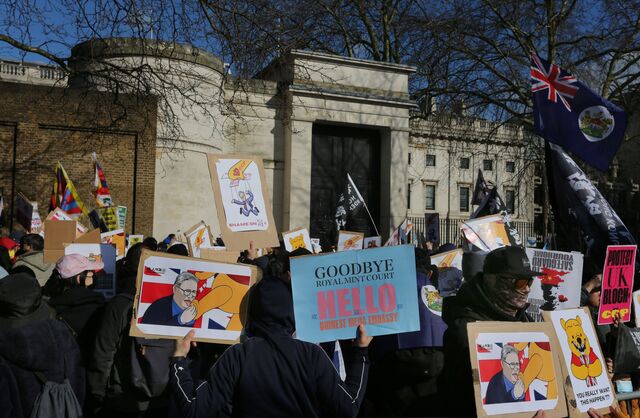
What would you do with the plan for a new Chinese mega-embassy on the edge of the City of London? It would be the largest embassy in Europe.
Countries obviously have to have embassies. We need one in Beijing — and it’s important that we have that — so it’s right and proper that the Chinese should get their embassy. Whether it’s this one or not isn’t really for me to judge.
It’s a particularly big one. It’s going to be an enormous site.
I’m not there to justify its size or what it does. But you know, I’m sure there has to be a way through, where they get an appropriate embassy, and we are allowed to retain and develop our own excellent embassy in Beijing. 4
4 The UK has irritated China by not yet approving the proposed embassy at the former Royal Mint, near the Tower of London, a site Beijing purchased in 2018. While Prime Minister Keir Starmer has called for a diplomatic and economic reset with China, he’s under pressure — including from members of his own cabinet — to take a tougher approach.
I do want to know about the journey of your professional life over nearly 40 years. Your recruitment in the early 1980s. How did that happen?
I’m afraid I am an almost stereotypical example of what is sometimes referred to as a tap on the shoulder and, what’s more, at Oxford. 5
5 Before formal procedures were put in place, spies were often recruited at Oxford and Cambridge universities, not only for the UK but — at Cambridge in particular — for the Soviet Union. The ‘Cambridge spy ring’ included individuals who were double agents, working for both British intelligence and the KGB.
I won’t name who they were, but an academic approached me and they knew that I was interested in a career in the Foreign Office — as well as your former employer the BBC, who rejected me without an interview.
Well, when I left university, I wasn’t eligible to enter the service you led, as my parents weren’t born in the UK. 6
6 Until 2022, Britain’s intelligence agencies required applicants to have one parent born in the UK. Under Moore, the rule was scrapped, with a spokesperson saying it had “unnecessarily stopped brilliant people from applying.” Now, the main requirement is to be a British citizen.
Thank goodness we’ve changed that, as we have also changed the method of approaching people.
So it doesn’t happen anymore, the tap on the shoulder?
No, not in that way.
I remember [the academic who recruited me] saying, Would you be interested in a career in an alternative field of foreign affairs? I didn’t have a clue what he meant, but one thing led to another.
Was that academic at Oxford in the service? Was that a cover?
No, in those days there was a very informal set of what were called talent spotters. Their job was to look at bright people coming through, and who they thought might be suitable for our peculiar line of work.
Did you hesitate once you realized what the words “alternative career” meant? I know your father was a Foreign Office man.
7 Moore was born in Libya, during one of his father’s overseas postings. When stationed outside the UK, MI6 agents will often have a cover role in an embassy or other diplomatic mission, but by “genuine,” Moore means his father was actually in the British Diplomatic Service. Moore himself came out, temporarily, from MI6, including to serve as the UK’s ambassador to Turkey from 2014 to 2017.
So you knew that world. But spying—
Yeah, I thought long and hard. I was intrigued by it, I thought it’d be exciting, [but] I didn’t know very much — in those days they told you virtually nothing.
I thought about the issues involved, which are quite difficult, involving a degree of deception. But being encouraged by people — including my wonderful father, who is so straight down the line, and a man of towering integrity, and had many friends within the service, and my mum cheering me on — I decided to give it a go.
The deception, what did that mean?
Some close friends, members of the wider family, are not aware of what you’re doing for a living, and you have to be comfortable with that.
If you are desperate for recognition, this is not the right profession. You’ve got to be satisfied with the intrinsic importance of the mission. You’ve got to be satisfied with the comradeship that goes with people who are in the know. You can’t go down to the pub at the end of the week and brag about it to your mates. 8
8 Ian Fleming once told the New Yorker that he wanted his titular hero James Bond to be “an extremely dull, uninteresting man to whom things happened; I wanted him to be a blunt instrument.”
When, and how, did you tell your children?
It varies from family to family. It’s a big decision because once you tell them, you are pulling them within that circle of knowledge and you’re putting something on them — they then become complicit. In our case, when our kids were in their early, mid-teens seemed the right moment to do it.
And the words you used were?
By that stage, I’m an experienced intelligence officer. I have learned to pitch [to] people, to put the question to them, Will you work with us? And I utterly messed it up with my son.
[My wife] Maggie and I made the mistake of sitting there and looking slightly nervous. So of course, I could see in his eyes he thought we were about to announce our divorce. Then I started to gabble in front of him and it just spewed out in the end. He kind of looked at me and said something which is unprintable.
But Maggie knew all along, because you’ve known each other since you were very young.
Yes, that’s unusual. When I joined the service at 24, we were already married.
Think of colleagues who begin a romantic attachment. Because they can’t just say it on the first date — at some point they have to find the right time to say they might not have been entirely honest in that first phase of the relationship.
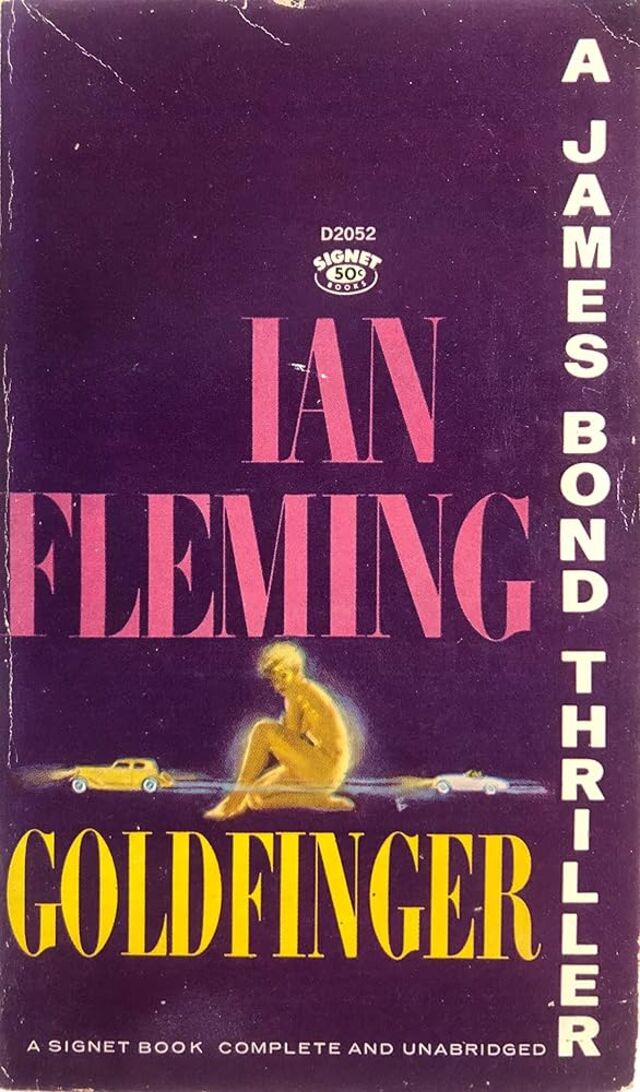
I want to ask about what spycraft is actually like. When you went into the service, you presumably would’ve read John le Carré and Ian Fleming. Was it actually like that?
So, this is a terrible admission to make, but when I came to the job, I hadn’t read a single Ian Fleming novel. I had read le Carré. I now put Mick Herron right up there in the pantheon.
9 These novels, about outcasts from MI5, inspired the hit TV series starring Gary Oldman. In a recent Bloomberg Opinion piece after the collapse of the Chinese espionage case, Matthew Brooker made this comparison: “The China spy scandal currently gripping UK politics and media is again redolent of a fictional milieu — but this time the action resembles more closely the chaotic world of Slow Horses, where sloppiness, confusion and infighting are the norm.”
Yeah. Many people will be more familiar perhaps with the TV show, but the books are fantastic.
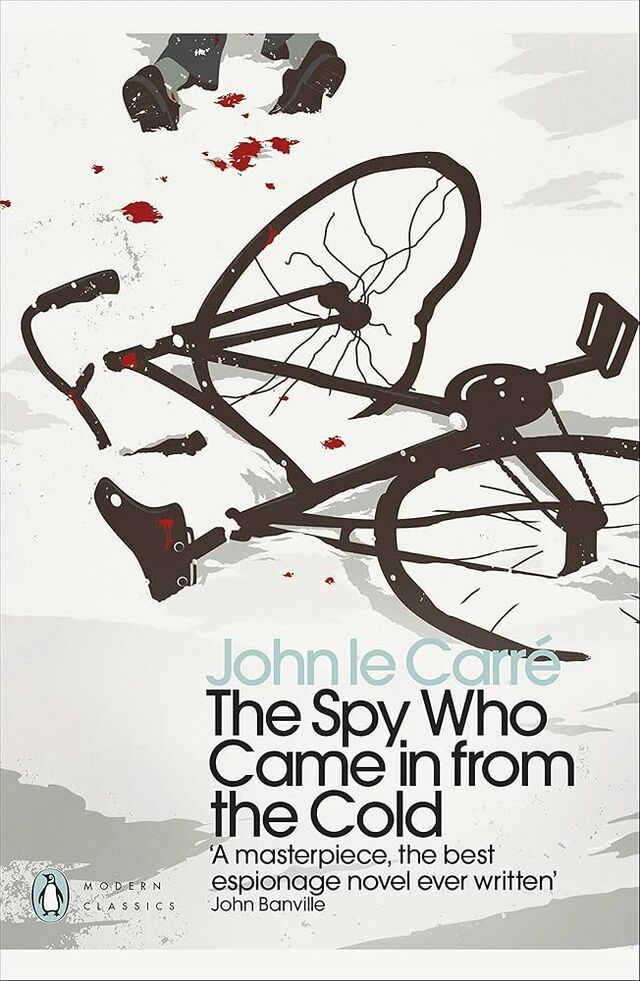
These are works of fiction, works of creativity. Clearly with le Carré, he spent a short period in the service, so there was some verisimilitude, particularly to those portraits of early Cold War Berlin. You occasionally will see references to tradecraft in them — sometimes it’s accurate and sometimes it isn’t. 10
10 From the opening of le Carré’s iconic novel, The Spy Who Came in from the Cold: “East and west of the Wall lay the unrestored part of Berlin, a half-world of ruin, drawn in two dimensions, crags of war.”
Of course, it’s very different in real life, but occasionally there is a degree of intrigue and excitement which touches over into that world.

Isn’t there also a degree of seeing the use in people and then using them? When you identify people, you are trying to work out how they can further Britain’s interests, and trying to get to them.
You are clearly trying to forge a relationship with another human being, because you need the secrets that they possess, yeah.
It means you have to create a relationship of real intimacy and trust with them, because you’re often asking them to take risks in order to gather that intelligence.
And sometimes you’re offering money?
What I can say is, very obviously, when people are going to come and talk to you and take those sorts of risks, they’re going to be driven by different motivations. Our job is not to be particularly judgmental, frankly, about those motivations, to try and work out something that works for both parties. If that involves some financial compensation, yeah, of course we’ll do that.
Did you ever have an agent who you’d recruited and developed who then was arrested, or worse, in another country?
Well, I’m going to distance it a bit from me, because I’m very averse to [giving] any clues as to who might have worked with me in the past. But of course, from time to time, that is bound to happen.
Our commitment to people is to keep them safe, and we will bend over backwards to do that. But in history, for reasons sometimes unconnected with what MI6 does, circumstances will lead to their arrest. It’s a very difficult moment, because we really root for those people, they are why we exist as a human intelligence service. It’s very painful when it happens, but it doesn’t happen very often, because we are very careful.
If you got a reputation of just using and abusing people, they’re not going to choose to come and talk to you, are they? Or when you approach them, they’re going to say a very abrupt no. But they know with MI6 that they will get care and attention and we’ll look after them.
Can I talk about something that almost certainly was a test of exactly what you’re saying? It’s the period after 9/11, when the US and the UK worked very closely together. The US carried out torture on detainees — we knew that from the Feinstein-led US Senate report in 2014. The UK, MPs found later on in their own report, went along with it.
I’m not sure I recognize the characterization you’ve just given.
I mean, we are clearly very close to the US. I worked through that period, including on difficult counter-terrorism work in Islamabad. In fact, my daughter was in a kindergarten whose windows were blown in by a bomb which exploded in the Egyptian embassy [in 1995].
It’s very clear that the US administration at the time did a whole pile of things which were utterly unacceptable. We all know about waterboarding, which is clearly torture.
But did you know about it at the time?
No, because they were very careful to exclude us. They absolutely did not tell their UK counterparts.
That’s not really what came out in the MPs’ report here in the UK. Their finding was that the UK tolerated “inexcusable” treatment of US detainees. The report says it was “beyond doubt” that the UK knew how the US was handling some detainees.
So I’m not sure I agree with “beyond doubt” in those terms, because I was there and they were not. Their description of the activity is perfectly valid, and I agree with it.
Let’s be clear: We deal with partners around the world who employ methods that we would not countenance. And we are very careful that in our engagement with them, that we do not facilitate or enhance that type of behavior.
MPs were pretty thorough: British agencies continued to supply intelligence despite knowing or suspecting abuse in more than 200 cases.
Mishal, we are taking it into slightly different areas. Did the relationship continue with the Americans and therefore did we pass material, as described by the MPs? Undoubtedly. Were lessons learned? Absolutely. There is now an entire compliance process around us. That doesn’t happen unless one recognizes that there are mistakes made.
As individual officers — including me at the time — no, I did not realize that my US counterpart was involved in that type of activity, otherwise I would’ve not approached it in the same way.
Is there an argument that we should have been better, earlier, at working out that things were going on that we would not do? Yeah, of course. I accept that completely.
I was just trying to resist any kind of implication that individuals within MI6 were complicit in this, because if they had been they would be in jail. Not a single MI6 officer has been prosecuted for this, and I’m very proud of that. That’s not because they weren’t caught, Mishal; it’s because they have [a] set of values.
Can we bring it up to the present day then?
Sure.
In September 2024, you appeared on stage at a Financial Times event with your then-US counterpart, [CIA Director] William Burns. You said: “We will share more with each other than we will do with anyone else because of the high levels of trust that built up over many, many years.” What were the last nine months of your service like, with a new Trump administration?
So, Bill moved out — he was a wonderful colleague and one of the great public servants of the US in recent decades. He was replaced by a gentleman called John Ratcliffe, who has been an excellent partner.
Clearly you get changes of administration in Washington. You get changes of government in the UK — in my case, rather too many. Leaving aside the politics, just the sheer number of prime ministers [and] foreign secretaries that I dealt with in my five years. 11 But the partnership remains the most critical one for our two nations.
11 There were six British foreign secretaries during Moore’s five years in the job. Over the past 10 years, the UK has had six prime ministers.
The people called upon to steward that relationship — the chief of MI6 and the director of the CIA — worked very hard on that relationship.
Are you suggesting there’s been no change at all? There was a very obvious practical change in March when the US suspended intelligence sharing with Ukraine. William Burns himself has characterized this period in the US as being a really difficult one — that the sacking of officials, including intelligence officers, has been about retribution rather than reform. 12
12 After the pause in intelligence-sharing — which lasted a week — Ratcliffe is reported to have met with foreign and intelligence officials in Brussels to convey a message of reassurance. Dutch spy chiefs recently told a newspaper they are now more cautious on what they share with the US, citing concerns around the “politicization” of intelligence.
What I can say is that the relationship continues to be a really important and strong one, and I work really hard on it.
All relationships evolve, they change. The personalities change, the policies change. When you’re a chief of MI6, you deal with the world as it is and get on with it.
But help me understand how it evolved in this period? Clearly, Russia, Ukraine, China — these are all present threats and issues.
You use your influence, don’t you?
Ukraine is a good example, where we have very clear views in the UK about prosecuting that war, and how to support the Ukrainians. Our voice is listened to in Washington. So things change, move around a bit — that’s the style of the current administration — but we are always there, and it’s our responsibility to convey exactly what the intelligence is telling us.
It’s telling us, for example, that Putin has no intention of doing a deal, that this is not an issue for him purely of territory, this is about dominating and turning Ukraine into something that looks rather like its neighbor, Belarus. 13
13 For Bloomberg Opinion, Marc Champion described Belarus, which has been led by authoritarian President Alexander Lukashenko since 1994, as “the model for the subservient union of Russian states that Putin wants to build.” The country is reliant on Russian energy and financial aid. Russia has used Belarus as a base of operations for thousands of troops during the Ukraine war, and installed tactical nuclear weapons there.
So if Vladimir Putin has no intention of doing a deal, how do you see this war ending?
Under current conditions — I’m basing this on access I had a few weeks ago to our understanding of the intelligence — [Putin] is not ready to do a deal. For me, the answer to that is he needs to be put under more pressure so he is prepared to do a deal.
The president of Ukraine is clearly ready to do a deal. He’s — remarkably, in the pursuit of peace — prepared to give away up to 20% of his country, de facto.
So what’s going to change that? More pressure on the battlefield. Ukrainians have an undercapitalized defense industry. They have spare capacity that cash would solve. There is more that we can give them in terms of permission to use long-range weaponry, for example, as well as giving them the basics of air defense. And there’s an opportunity to put a lot more pressure on Putin at home.
I don’t pretend that is going to give immediate results. We have to be patient. We have to be prepared to see this off. I’ve talked about the seminal importance of this for the western alliance — that we do not lose this contest of wills.
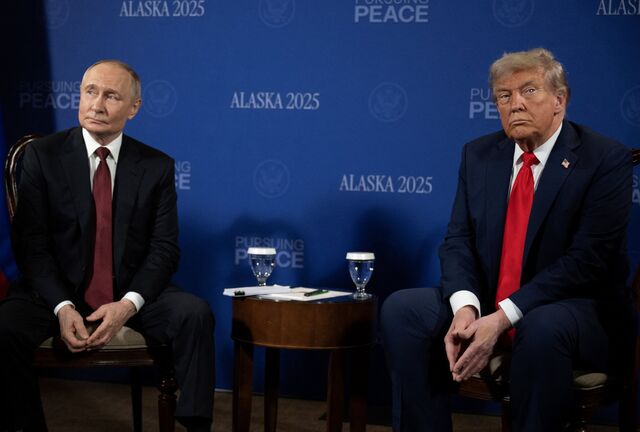
So you’ve told me your reading of President Putin. What about your reading of President Trump? Why does he give Putin the red-carpet welcome? Why does he give him the benefit of the doubt again and again? 14
14 The Putin-Trump meeting in Alaska in August began “with a highly-choreographed spectacle,” Bloomberg reported. “The two disembarked from their planes and walked across the tarmac to red carpets in a scripted opening. Trump clapped as he watched Putin approach and then greeted him with a warm handshake and pat on the arm.”
Mishal, the wonderful thing about the job I had the honor of doing is that we spy on Putin, but we don’t spy on our American allies. There are other people who would be better qualified than me to comment on US politics.
But the reading of him from your experience, not inside information.
What I would say is, I do recognize in President Trump a genuine commitment to peace. He clearly finds the horrors of war — as witnessed in Ukraine, or indeed Gaza — abhorrent, and is determined to bring it to an end.
I think there has been an evolution of thinking in the administration about Putin.
Clearly Putin is trying to play us. He’s an intelligence officer, Mishal. I recognize the type. He’s trying to maneuver us into a place which is convenient for him, and we need to pin him down and not allow him that maneuverability. 15
15 Putin joined the KGB in 1975, after university in what was then Leningrad. He learned German and was posted in East Germany when the Berlin Wall fell in 1989, watching as the Dresden headquarters of the Stasi secret police were stormed by protestors. Today, former KGB colleagues remain among his closet confidants.
You are painting a picture of a long war ahead.
I was paid to steal secrets, not solve mysteries.
But it’s just so, so important that we don’t lose this contest of wills. Not just because of Putin and other senior Russian minds — what it might invite in opportunistic testing of our defenses, some of which we’ve seen in recent weeks — but also because President Xi is watching this really carefully.
The Chinese leadership has evolved a narrative of Western weakness ever since the international financial crisis. There’s a real danger that if he sees us being weak on Ukraine, then he will draw conclusions on his own behaviors around the South China Sea, and potentially on Taiwan.
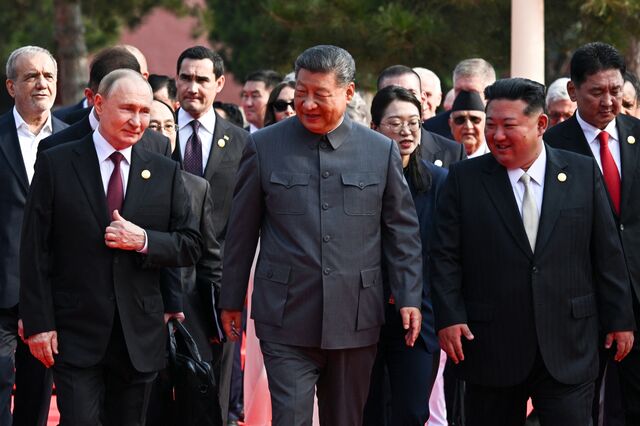
Have those two countries, Russia and China, been pushed closer together by America’s actions this year? Remember those images in Beijing, with Vladimir Putin, Xi Jinping and Kim Jong Un together? 16
16 In an earlier Weekend Interview, I asked Chinese historian Jung Chang to reflect on this image. “I am revolted,” she said. “I’m full of dread that China might take over the world, in which case where would I run? And where would everybody else run?”
I don’t think they’ve been pushed together by the US. They have been pushed together by their alliance, particularly around Ukraine.
It’s a very unequal arrangement, but Putin has become increasingly dependent on Chinese support. Although the Chinese have not given the Russians some of the more sophisticated weaponry, they have been very helpful [in providing] dual-use things which might have a civil and a military application. The chemicals in those shells are mostly Chinese; a lot of the components in the missilery are Chinese. 17
17 The Chinese government has denied providing lethal weapons to Russia, and says it strictly controls exports of so-called dual-use items.
And of course the Iranians and the North Koreans have also helped him out. So there has been a tightening of that group of four people to do bad stuff together.
The US has for the last couple of months been carrying out strikes on boats in the Caribbean, saying there were drug smugglers on board. You’ve grappled with so many issues of this kind; you’ve lived through a time of drone strikes in places like Afghanistan. What do you think when you look at that situation in the Caribbean?
I really am not across it, Mishal. It’s not in the forefront of British interests. So I genuinely don’t know what the US are basing these strikes [on].
You made the reference to Afghanistan. We would always prefer to arrest people and put them in front of a court. But in certain parts of the world, at certain times, people who would do you harm, you can’t reach them.
And in extremis, ministers might authorize a lethal operation, like a drone strike, in order to remove a threat. But when you do that, UK law requires things to be necessary and proportionate to the threat posed. There’s usually a strong, very legalistic word: imminence. In other words, it’s not just a threat might be vaguely materialized in 20 years’ time. It has to feel real and now. That’s the basis on which we would proceed. And I really can’t comment on what’s happening in Venezuela. 18
18 Moore really didn’t want to talk about this, but the boat strikes began in September and it’s impossible to think the issues arising wouldn’t have crossed his desk as chief. Soon after we spoke, CNN reported that the UK had suspended some intelligence sharing with the US, due to concerns over these strikes, which a UK government spokesperson did not deny. For another perspective, see our recent Weekend Interview with Venezuelan opposition leader María Corina Machado.
Can we talk closer to home, about politicians in Europe? I’m thinking of two who have been accused of echoing Russian talking points on Ukraine, being soft on Russia. One is Nigel Farage, who might be the next UK prime minister, and the other is Marine Le Pen. Would you have concerns about either of those people being elected?
Mishal, I’ve spent 38 years being devotedly non-partisan. I’m not about to throw that habit out of the window.
What is the job of the chief of MI6? It’s to serve the government of the day, obeying UK law. You provide truth to power, frequently appear in front of the prime minister and the foreign secretary and sometimes tell them things they really, really don’t want to hear, particularly if it’s a Friday afternoon.
So when you step away from all of that, as you have now, what is the decompression like? I imagine you can’t really do a job like that without devoting every waking hour to it.
I didn’t worry about things I couldn’t change. I would focus a lot on our own business, the business of human intelligence — keeping that going in a world where the tools of surveillance used against you are pretty sophisticated.
I would worry: Are we going to stay in this game? Are we going to keep being good enough at our methodology, our tradecraft? Are we going to get the right technology fast enough?
Is it much more about technology than the human factor now?
It’s both. It’s not binary at all. You need great technology. AI helps us enormously in interrogating vast amounts of data and perhaps helping us to find somebody who might be prepared to help us.
At the same time, you can see in China that the surveillance state is pretty well advanced and a lot of that technology makes its way overseas. It doesn’t have to be Beijing; you might encounter that in Dubai or another city. We have to be very mindful of the capabilities that are deployed against us.
I worried whether we’d stay on top of the game. I’m glad to report I think we are, but it’s a bit of an arms race. One of the reasons I decided that we needed to be a little bit more open about ourselves, and speak about our mission a bit more, was because I wanted to engage technology outside government — they would often have the solutions that would help us in that space. 19
19 Moore became the first MI6 chief to give a live broadcast interview while still serving in the role. He didn’t do many, but in his time the service also launched an Instagram account and put instructions on YouTube showing people how to make contact securely.
You mean OpenAI, Google?
Everything from the really big defense or tech companies, to the woman doing something in her garage to invent something utterly brilliant.
The bigger companies were easier to reach; we had some structures for doing that. We would clear members of their team so they could see some of the secret stuff. But if you are a small startup, that’s not your world. And if we were to wait and say, We need to put you through security vetting, these people start up, make their billion and go out of business in the time it would take us. So it was important that we were more open.
Did you manage to do some kind of fast track?
Yeah, we’ve done some great stuff. HMGCC [His Majesty's Government Communications Centre] — which is a horrible acronym, I apologize — is our national security engineering hub. If you are a Bond fan, I suppose it’s the nearest we have to Q Labs. You can now go to a building near Milton Keynes Station and you can literally walk in and talk about some of the technology.
A few years ago, under my predecessor, we decided to get into venture capital. The National Security Strategic Investment Fund [NSSIF] looks at technologies which might not quite make it [if] left purely to the commercial side, but having a UK intelligence community imprimatur often excites the interest of private venture capital. Of the technologies that are invested in, 40% of them end up being used in the organization. That’s a big change. 20
20 It may not develop submarine cars and wristwatch lasers, but the NSSIF, created in 2018, says it focuses on AI, space, quantum and other emerging technology. It’s similar to In-Q-Tel, set up by the CIA, and has backed the likes of drone-maker Tekever — which now provides hardware for the UK’s air force — and quantum computing startup Oxford Ionics, later purchased by a US firm for $1 billion.
What does life on the outside feel like?
If you’re going to do these jobs, you do them for five years and you have to look after yourself. 21 I had an extraordinary institution under me, and you can delegate. I could walk away and have a holiday — clearly if something massive blew up, then you come home.
21 Stepping down after five years is a relatively modern convention. The first MI6 chief, a monocled naval officer named Mansfield Cumming, served from 1909 to 1923. He signed his letters ‘C’ for Cumming; the one-letter nickname stuck and was adopted by future chiefs.
I’m also, I think, a reasonably calm person. I’m not a big fretter. You don’t want a worrier in this job.
[In] the last six weeks, a lot of friends are looking for me to look totally transformed, but I don’t feel that way. I had a very nice holiday with Maggie in Tuscany, then we came back, and I’m thinking about what I might do next.
There’s a vacancy for ambassador in Washington.
It’s not for me. I wish whoever takes on that role the best of luck, and I’m sure they'll get a great candidate.
Why do you say no so easily?
I say it so easily because, of course, I’ve given a lot of thought and made a decision. I think there are people better-qualified than me to do the job. After five years of a really intense job, I’m ready to do some other things — including seeing a bit more of my grandson.
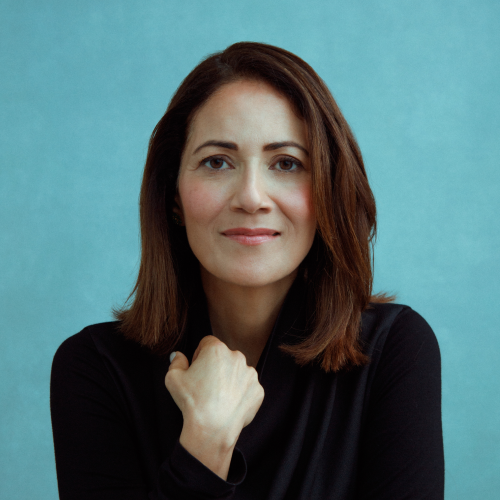
Mishal Husain is Editor at Large for Bloomberg Weekend.