

The Shrink Next Door
Part 1: Welcome to the Neighborhood
A summer party. A stormy night. And a shocking revelation about Joe’s neighbor next door.
This whole saga began for me with the most ordinary of financial transactions. In 2010, my wife and I bought a house.
It was in Southampton, N.Y. — yes, the Hamptons, but not the oceanfront part with the $30 million mansions. Our house was in a small, quiet 1980s development, a short walk from the bay. Most of the homes were plain vanilla, at least by Hamptons standards — single story, with a small yard and a swimming pool.
The house next door to ours was different. A small wooden bridge spanned a fish pond, leading to the front door. In the second-floor sunroom stood a full-sized skeleton I could see from my backyard. There was a two-story guesthouse, and at the entrance to its basement was a copper sundial, 40 feet tall. Life-sized statues of cows dotted the backyard. There was a pool, a basketball court, a tennis court and a miniature golf course.
The name on the front door was Isaac Stevens. It was an alternate name used by Dr. Isaac Steven Herschkopf, a prominent New York psychiatrist. Everybody called him Ike.
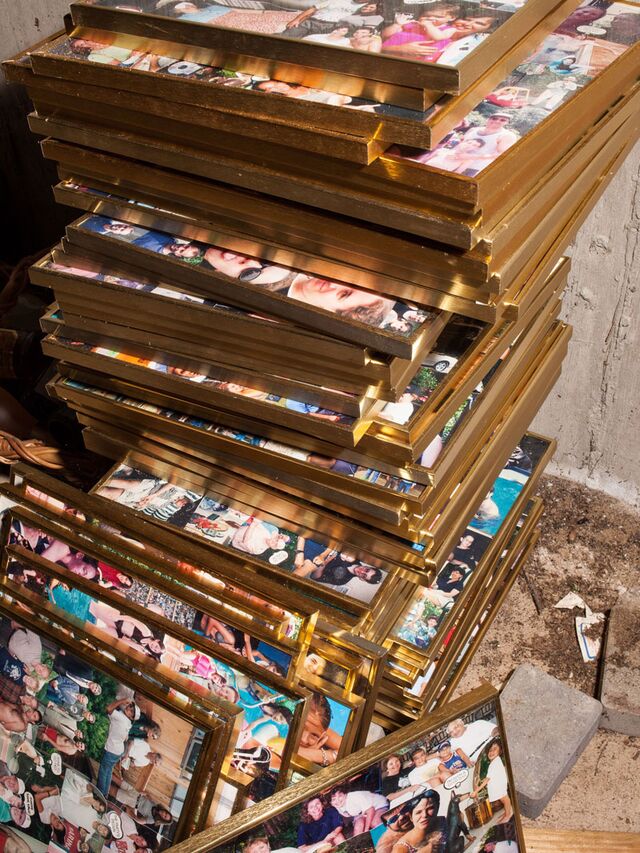
There was another man at the house that summer, and we’d often see him, dressed in green, tending to the grounds. In July 2010, a few months after we’d bought our home, he paid us a visit, bearing a folder full of press clippings. Some were articles written by Herschkopf. Others were articles written about him.
The man introduced himself: Marty Markowitz. On that first meeting, I recall he said he worked for a very important psychiatrist in New York. “He told me to say that to you, just like that,” Marty later told me.
Markowitz came by a few weeks later to invite us to an end-of-summer party he said Ike was throwing. I went, and saw Ike making his way among the guests, who included actor Richard Kind and Dr. Ruth Westheimer, the sex expert. Photos of Ike with celebrities hung on a wall of the house. Marty was there, snapping more pictures.
My wife and I assumed the house was Ike’s. His name was on the mailbox, after all, and the doormat. “All those years we thought Ike was the owner,” said our neighbor Jackie Giat.
Eventually, a different picture began to emerge. Markowitz wasn’t the house’s maintenance man; he was the owner. And Herschkopf? He had been a lot of things to Markowitz over the years. As I began to pull at the threads of their relationship, I found a tangle of ties between them — business, financial, personal.
But first, before anything else, Herschkopf had been Markowitz’s psychiatrist.
Markowitz had turned to Ike for therapy almost three decades earlier. Over the years, according to Markowitz, Herschkopf collected fees from him while turning him into a kind of personal servant. Herschkopf counters that Markowitz was trying to blame everything that had gone wrong in his life on “an omnipotent Svengali.”
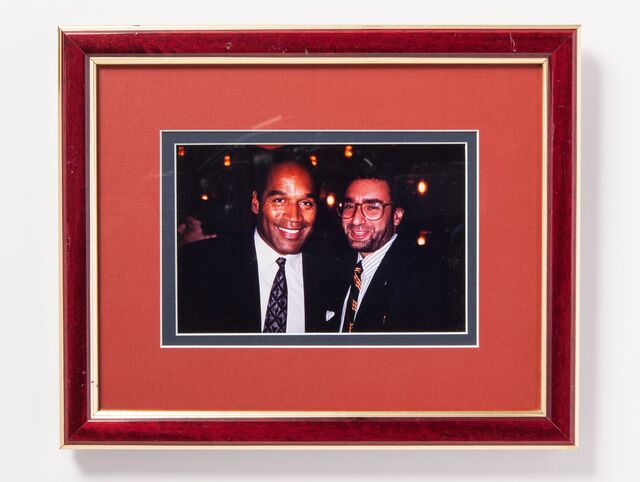
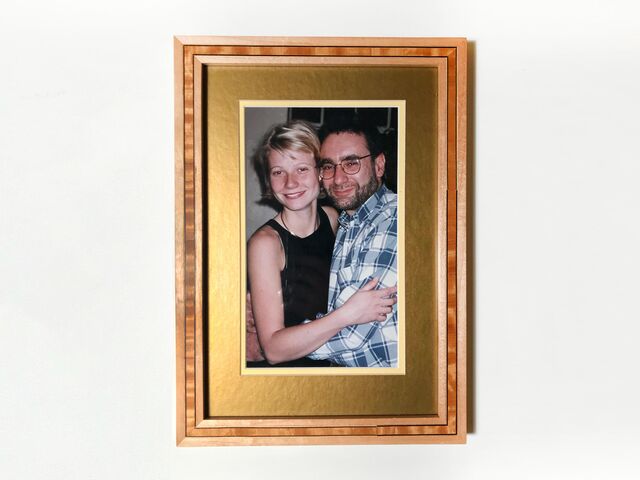
So which was it? More than seven years ago, I started to look for an answer. This is the result — drawn from some 60 hours of interviews with over two dozen people, as well as a trove of documents that includes old photos and home videos, bank records, legal documents, canceled checks, party invitations and guest lists, and a trail of personal and official letters spanning nearly four decades.
Psychiatrists have long understood they have a kind of power, especially over their most vulnerable patients. One of the principles of medicine is to first do no harm, which is followed by doctors to this day. Maybe it’s harder in the case of psychiatrists to see whether they are helping or harming — and where to draw the line.
And maybe part of the answer was right next to me — inside the house next door.