India’s Food System Is Under Strain, and Farmers Are Paying the Price
The world’s most populous nation has made huge strides in agriculture, but it still depends on tens of millions of ill-equipped producers.
As late as the 1960s, India was one of the world’s largest importers of food aid. Today, with more cropland than any other nation on earth, it’s a leading global producer of rice, wheat, milk, sugar and more.
But the headline belies a less flattering reality.
The agricultural system that feeds India’s 1.4 billion people — and many more in overseas export markets — still relies on tens of millions of ill-equipped smallholders. Urban populations are expanding and diets are changing on the subcontinent, demanding more from the land. Yet farm plots are shrinking, infrastructure remains rickety and climate change is only bringing more disruption. India still lags China in yields for major crops, even though the government has more than doubled farmer subsidies over roughly the past decade.
The most significant effort to tackle this underperformance, effectively by deregulating internal markets, sparked many months of dramatic demonstrations by Indian farmers in 2020 and 2021 — the worst protests of Prime Minister Narendra Modi’s near decade-long tenure. The crisis reflected a rushed, poorly handled legislative process, but also the extent of the tangle created by decades of distorting subsidies for both producers and consumers. New Delhi backed down.

The result is a still-hobbled sector that is rapidly becoming a threat to food security in the world’s most populous country, upping the stakes for Modi’s ruling party, which faces state elections this month and a national vote next year. It’s also a growing global problem, as export limits multiply. To curb food inflation and appease a price-conscious electorate, New Delhi has again this year turned to hefty shipment restrictions for rice and sugar, at the expense of farmers and future production.
“There is a neglect of agriculture,” said Kirankumar Vissa, the co-founder of Rythu Swarajya Vedika, a farmers’ organization in southern India. “Government policies are actually not really helping the farmers.”
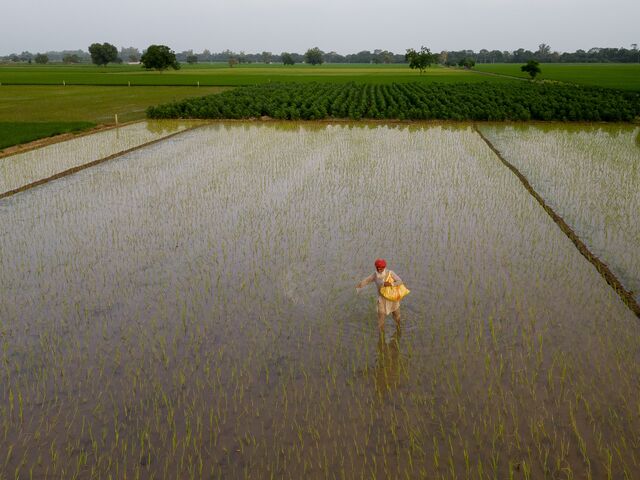
Take rice. India’s production has surged over the past decade, accounting for some 40% of global shipments before the latest limits, broadly equivalent to the next four exporters combined. Now curbs have tempered costs at home, but they’ve hurt vulnerable importing nations, pushing the global price to a 15-year high and raising the possibility of social unrest in regions like Africa, dependent on India for the key staple.
Such restrictions also squeeze farmers. Joseph Glauber, a senior research fellow at the International Food Policy Research Institute in Washington, argues curbs create significant disincentives: “The price the producer is receiving is actually lower than an external or global price.” He points out that one key measure of agricultural support developed by the Organisation for Economic Co-operation and Development is negative for India — meaning the impact of price-depressing rules and trade policy outweighs that of input subsidies.
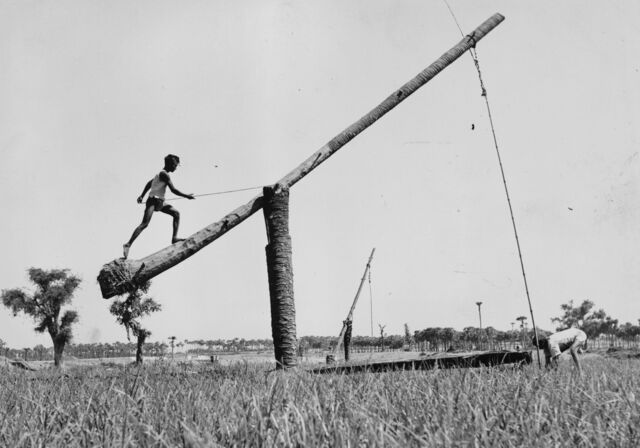
Indian farming was transformed by the green revolution that started in the late 1960s, but to a large extent the industry continues to reflect priorities of that period. Subsidies still focus on the production of staples like wheat and rice, rather than crops needed for balanced nutrition, or those that command higher returns for farmers. Too little attention is paid to land degradation, the unsustainable use of fertilizers and pesticides, and an overuse of groundwater, thanks to power subsidies.
The strain is visible in India’s fields. Though agriculture employs close to half of the working population, it generates less than a fifth of gross domestic product. Half of India’s farmers lack access to financing sources to buffer against shocks, McKinsey & Company estimates. Many of the millions who still don’t get enough food in India are farmers themselves. Successive governments have struggled to stem suicides among cultivators.
Agriculture Secretary Manoj Ahuja didn’t reply to requests for comment for this story.
India's Productivity Gap
When it comes to rice yields, the world's top exporter of the grain lags behind key rivals like China

Farming in India can easily become a debt trap, with tragedy touching many towns across the country.
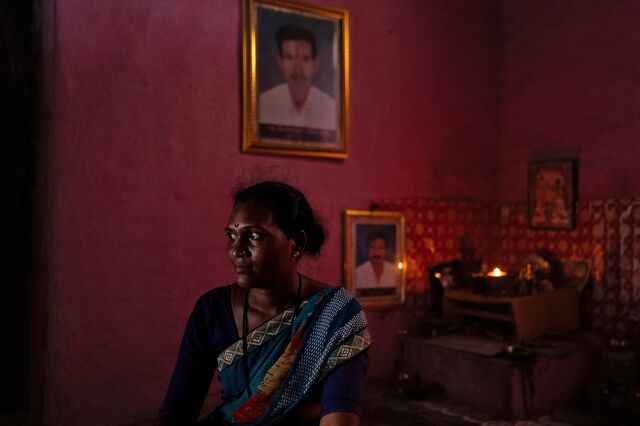
Sher Singh, a cultivator in Punjab, committed suicide in 2015, leaving behind a debt of some 700,000 rupees, or about $8,400. To stay afloat, his widow, Ranjit Kaur, leases out their half-acre farm, making 20,000 rupees each year in rent. Kaur said their teenage son must eventually pay what is owed — but not, she is adamant, with the same work that pushed her husband to the brink.
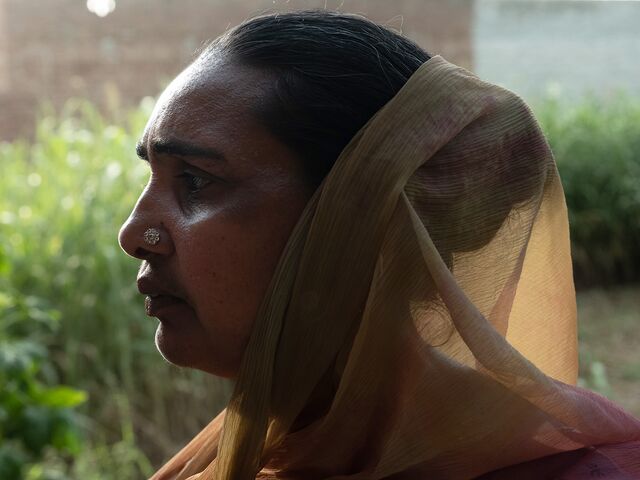
“I’m not telling him about the debt now. Otherwise, he would quit everything, look for work, and that would be a disaster for me,” Kaur said, sheltering from rain in the courtyard outside her home, where she clutched a photograph of her husband.
Farmers often turn to credit to manage expenses during the sowing season, but heavy reliance on rain for irrigation means yields are often volatile, a gamble that’s only getting riskier as the planet warms. And many aren’t able to access loans or insurance because they don’t have land deeds in their name, often because paperwork is incomplete or they’re tenants.
On financial inclusion, India has made some strides. Hundreds of millions of Indians opened bank accounts over the past decade, and the Aadhaar biometric system has pulled more people into the formal economy. Over the last seven years, agricultural loans have more than doubled, while short term loans offered through the Kisan credit card scheme have helped boost incomes and reduce dependency on moneylenders.
India's Shrinking Plots
Land holdings have been shrinking for the past five decades, and the fragmentation looks set to continue

But these initiatives still favor the literate and well-off. Many farmers face caste-based discrimination when they seek out loans or are deemed ineligible because of past defaults. Meanwhile, informal lenders require little or no paperwork, incentivizing many to go that route, even if coercive methods for repayment are common.
The final costs can be crippling. Farmers who secure credit often pay inflated interest of 10% to 25% above market rates, McKinsey estimates. And even without that, the burden is heavy. The average debt load per household, according to a recent official assessment, was over 70,000 rupees, at least seven times their average monthly income, depending on how that is measured. Half of agricultural households are indebted.
“It’s great when it works, but when it doesn’t, it can have extremely detrimental effects on people’s lives,” said Sohini Kar, an assistant professor at the London School of Economics and the author of a book on Indian microfinance.
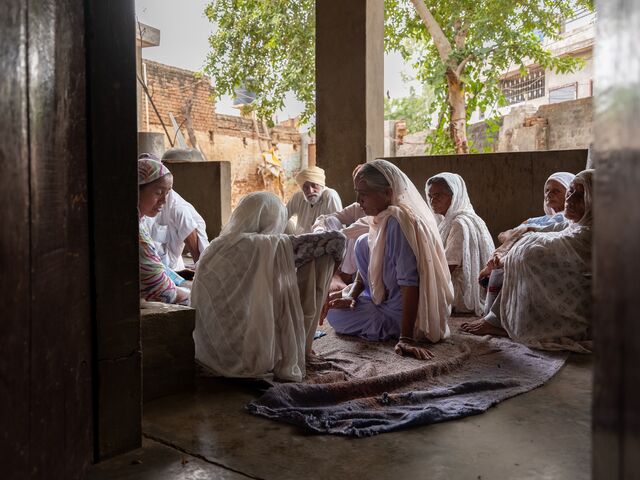

Ahead of national elections next year, India’s politicians are renewing pledges to fix the farming sector, keenly aware that few issues matter more to voters than food prices.
It’s a sensitive topic. Back in 2020, farmers came out in droves to argue that proposed reforms would lead corporations to remove safety nets and eventually buy them out.
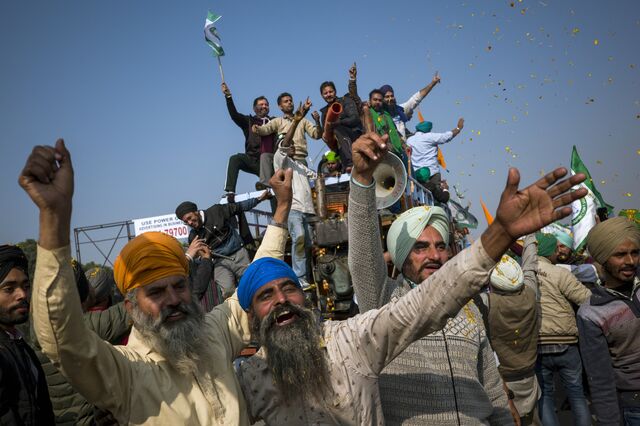
Officials have long sought to make agriculture more sustainable, and even the ideas behind the ill-fated attempted redesign dated back decades. But while overall grain production has climbed, farmer incomes and productivity continue to disappoint. In large part, that’s because the emphasis remains on keeping prices low for households — not on farmers’ livelihoods, much less on competition.
Modi’s government has also made little progress dismantling state controls that discourage crop diversification beyond rice and wheat. A recent campaign to promote millets — a crop seen as a healthy alternative to today’s staples — has yet to make dramatic inroads. Both farming and diets lack the diversity required for sustainability. The average Indian diet still has too much cereal, and not enough protein, fruit or vegetables.
“Unless you change the fundamental protections that have historically been provided to the basic staples, you’re not going to see a broader change,” said Prabhu Pingali, the founding director of the Tata-Cornell Institute for Agriculture and Nutrition, a US-based research group focused on the emerging world.
Many farmers aren’t optimistic about the future.
Gurjeet Singh, 25, a wheat grower in Punjab, can barely keep up with debt payments. About seven years ago, his family sold jewelry and borrowed from a moneylender to afford a borewell for irrigation — only for the electricity connection to remain elusive because local authorities never completed the work.
The family, already struggling with past cotton crop failures, was unable to pay down debt, prompting Singh’s father to take his life late last year. Then hail and rain damaged the wheat harvest, leaving the yield on their two-acre farm a third lower than anticipated.
“We didn’t have any insurance,” Singh said. “I will have to sell some of my land to pay back part of the loans.”
India Has More Agricultural Acreage Than Any Other Country
Arable and permanent cropland (in million hectares)

State-run bank officials say they’re often unable to extend support to farmers, especially those who’ve defaulted in the past. One official in Maharashtra, in western India, said those with poor records sometimes appealed to family members to take out loans, using gold as collateral.
Government initiatives like Pradhan Mantri Fasal Bima Yojana, a crop insurance program, have leveraged technology, premium subsidies and other support to help widen and increase protection. But here, too, progress has been stymied by limited public awareness, a lack of trust in the bureaucracy and not enough capital to pay premiums.
In 2023, for the kharif crop, sown as the monsoon begins, PMFBY covered 28 million hectares — about 14% of India’s gross cropped land. Women, in particular, remain notably absent from the shrinking group of covered farmers. Though three-quarters of women in rural India work in agriculture, the PMFBY scheme is 85% male.
“The scheme could never reach its target,” said Sukhpal Singh, an agriculture management professor at the Indian Institute of Management in Ahmedabad. It struggled to get past 30% of cropped area, Singh said, as states withdrew, bringing in alternatives, while the central government made the scheme optional for borrowers, contributing further to the fall in numbers.
India is not alone in its farming struggles. China, too, has a vast population to feed and limited water and arable land. Yet looking just at key grains — corn, rice and wheat — the East Asian nation’s crop yields are well ahead of India’s. The value of its production is close to four times higher.
Spending differences help explain the disparities. Whereas China has ploughed money into improving seeds and fertilizer use, India has faced constraints when it comes to public infrastructure spending. Public investment in research and development is still below 0.5% of agriculture gross domestic product — half of the Indian government’s target. In absolute terms, China’s average annual research spending was more than the United States, India and Brazil combined between 2019 and 2021.
“China has better infrastructure, in terms of getting a market for the food that’s being produced, and lowering the cost of inputs,” said IFPRI’s Glauber.
India’s start-up entrepreneurs are trying to narrow the gap. Drones are fighting locusts and mapping rural properties, and efforts are being made to reduce the volume of food wasted post-harvest — an $11 billion problem for India. The online platform eNam is helping cultivators sell their produce beyond their local region.
The most visible impact in recent years has come from aggregating small producers to boost earnings, often prioritizing higher-value crops. Farmer producer organizations, or FPOs, are cutting trade and transport costs and increasing bargaining power for cultivators.
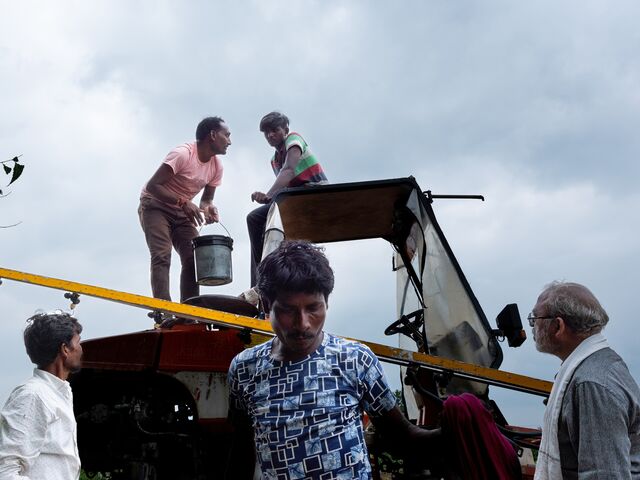
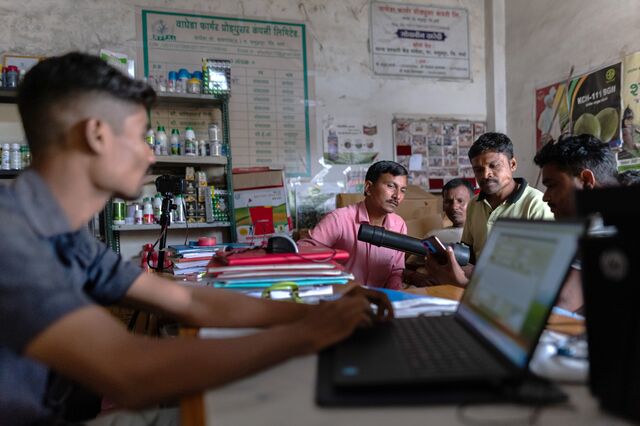
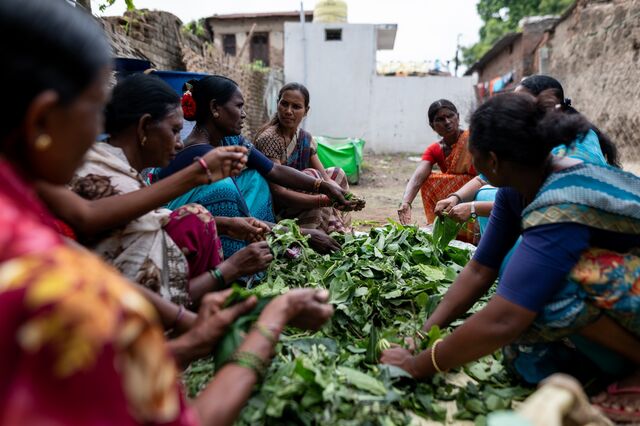
Cooperatives have a mixed record in India. Most have faltered from corruption and political interference. The FPO structure, encouraged by government agencies and capital but somewhere between a company and a cooperative, is considered an improvement. Many have limited membership and shared voting rights.
In Maharashtra, Sameer Sakhar, 35, is among the beneficiaries. Without the ability to borrow money from a bank or relatives, Sakhar approached Vartman Agro Producer Co. in his village to obtain seeds, fertilizers and pesticides on credit.
“I was in big trouble after my soybean and pigeon pea crops were damaged due to pest attacks,” Sakhar said, speaking by a well in his neighbor’s farm, as machines sprayed pesticides on a nearby field. “Here, I could repay the money with some interest in about nine months after selling my harvest.”
But like other initiatives, this one too has so far struggled to gain enough traction with the farming community. FPOs still lack capital, clout and sheer numbers: The government counted roughly 7,000 in March 2022, below the target of 10,000. The subsidy system remains inefficient and tilted towards consumers at the expense of producers — far from a long-term solution that encourages better use of resources and more diverse, nutritious crops, for India and for the world.
“Where the main solution lies is to make farming itself more sustainable,” said Kar, the LSE professor. “A financially, ecologically sustainable practice that ensures the wellbeing of the farmer.”
Sign up for the India Edition newsletter by Menaka Doshi — an insider’s guide to the emerging economic powerhouse, and the billionaires and businesses behind its rise, delivered weekly.